
Comic characters that belong to the Big Two are a sort of group project. There are their creators, of course, but as soon as they’re put onto the page, these concepts are in the hands of many who can leave their marks on them as the years go on. Sometimes, this can lead to incredibly compelling character arcs written by several different creatives over years and years. Sometimes this can lead to wildly inconsistent versions of the same character. Sometimes it can lead to the same storyline being repeated ad nauseam because nobody has anything better to do, and that’s never really fun. Sometimes, though, the most compelling stories a character can get are at the hands of one artist, and in the case of the ninja assassin Elektra, these stories were developed by her creator, Frank Miller.One of the most beloved creators in Western comics, Miller was a powerhouse beloved by many, with a string of projects that were darlings among fans and critics. The book that started it all for him was Daredevil. He was brought onto the book as an artist initially, before being handed the reins to the to-be-cancelled title as its primary creative force, with further contributions from Klaus Janson as its sole inker. The run would be a hit, its debut issue marking the start of a new era in the form of a new character: Elektra. The killer was a former lover of Matt Murdock’s who found herself back in his life by chance, struggling to establish her morality as an agent of the Hand and an assassin for Kingpin. A compelling character afforded a sense of compassion and grace by Miller, she’d go on to become a pet character of his, given a compelling arc that ranged across some of his best works: Daredevil: The Man Without Fear, Daredevil, Elektra: Assassin, and Elektra Lives Again.The first and only real overhaul made to the story was in the pages of Daredevil: The Man Without Fear by Frank Miller, John Romita Jr., Al Williamson, Christie Scheele, & Joe Rosen. The story filtered the early days of Matt Murdock and his supporting cast through the lens of a more seasoned Miller, more willing to tell a story that was all around more grim. This isn’t to say his mainline Daredevil run wasn’t dark or mature, but there was a more apparent edge in Man Without Fear.
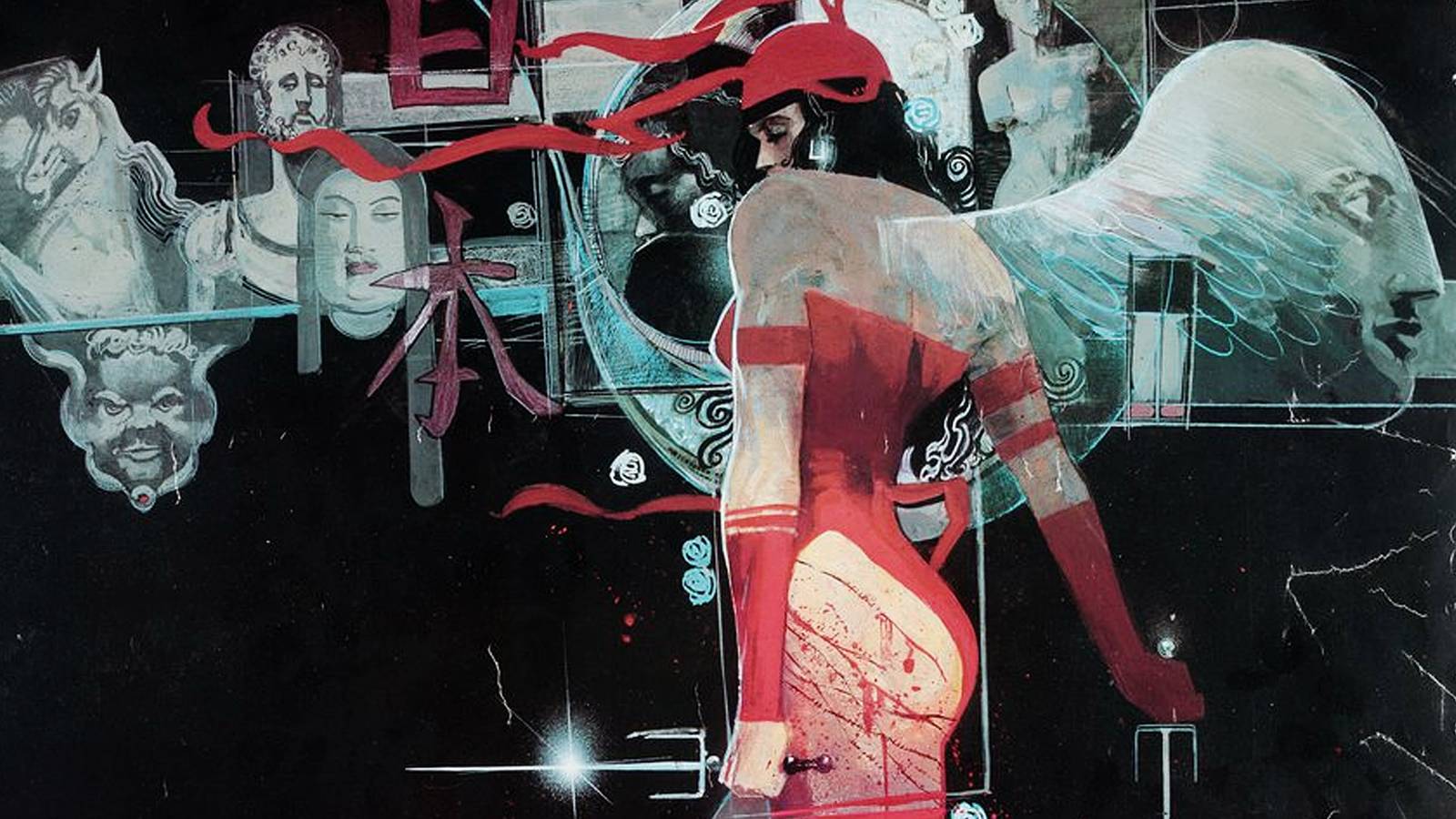
Comic characters that belong to the Big Two are a sort of group project. There are their creators, of course, but as soon as they’re put onto the page, these concepts are in the hands of many who can leave their marks on them as the years go on. Sometimes, this can lead to incredibly compelling character arcs written by several different creatives over years and years. Sometimes this can lead to wildly inconsistent versions of the same character. Sometimes it can lead to the same storyline being repeated ad nauseam because nobody has anything better to do, and that’s never really fun. Sometimes, though, the most compelling stories a character can get are at the hands of one artist, and in the case of the ninja assassin Elektra, these stories were developed by her creator, Frank Miller.
One of the most beloved creators in Western comics, Miller was a powerhouse beloved by many, with a string of projects that were darlings among fans and critics. The book that started it all for him was Daredevil. He was brought onto the book as an artist initially, before being handed the reins to the to-be-cancelled title as its primary creative force, with further contributions from Klaus Janson as its sole inker. The run would be a hit, its debut issue marking the start of a new era in the form of a new character: Elektra. The killer was a former lover of Matt Murdock’s who found herself back in his life by chance, struggling to establish her morality as an agent of the Hand and an assassin for Kingpin. A compelling character afforded a sense of compassion and grace by Miller, she’d go on to become a pet character of his, given a compelling arc that ranged across some of his best works: Daredevil: The Man Without Fear, Daredevil, Elektra: Assassin, and Elektra Lives Again.
The first and only real overhaul made to the story was in the pages of Daredevil: The Man Without Fear by Frank Miller, John Romita Jr., Al Williamson, Christie Scheele, & Joe Rosen. The story filtered the early days of Matt Murdock and his supporting cast through the lens of a more seasoned Miller, more willing to tell a story that was all around more grim. This isn’t to say his mainline Daredevil run wasn’t dark or mature, but there was a more apparent edge in Man Without Fear.
#Frank #Millers #Elektra #Saga #Explained
Note:- (Not all news on the site expresses the point of view of the site, but we transmit this news automatically and translate it through programmatic technology on the site and not from a human editor. The content is auto-generated from a syndicated feed.))